

 +91-967-666-3850
 jaikapees@gmail.com
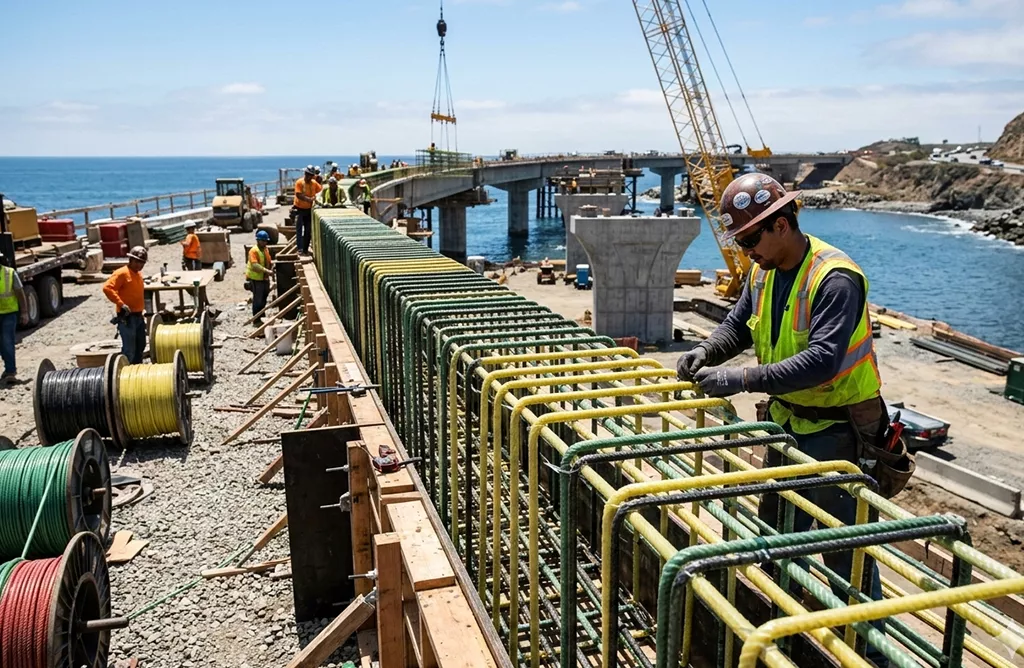
In today’s construction industry, durability and long-term performance are two of the most important aspects of a construction project, especially while designing a structure. Conventional steel reinforcement materials are used in construction, but they are not effective, as they are prone to corrosion, rust, and maintenance costs are also high. This problem has been addressed with the introduction of FRP rebars.
Today, many construction companies are promoting the usage of new reinforcement materials, which are more effective, durable, and long-lasting compared to conventional materials. FRP rebars, which stand for Fiber Reinforced Polymer, are new materials used in construction, which are more effective compared to conventional steel reinforcement materials.
In this blog, we are going to discuss the benefits of FRP rebars, which make a construction project more durable, as they are easy to maintain.
What Are FRP Rebars?
FRP rebars refer to composite materials comprising strong fibers like glass, carbon, or basalt and a polymer resin. These materials produce a lightweight yet extremely strong composite material for reinforcing concrete structures.
Unlike steel rebars, FRP rebars do not corrode or rust when exposed to moisture, chemicals, or harsh environmental conditions. Because of these properties, FRP rebars have become popular in various infrastructure development projects, bridges, marine structures, and industrial buildings.
Today, there are several manufacturers of FRP materials that produce advanced FRP materials engineered to enhance the performance of building materials.
The Durability Advantage of FRP Rebars
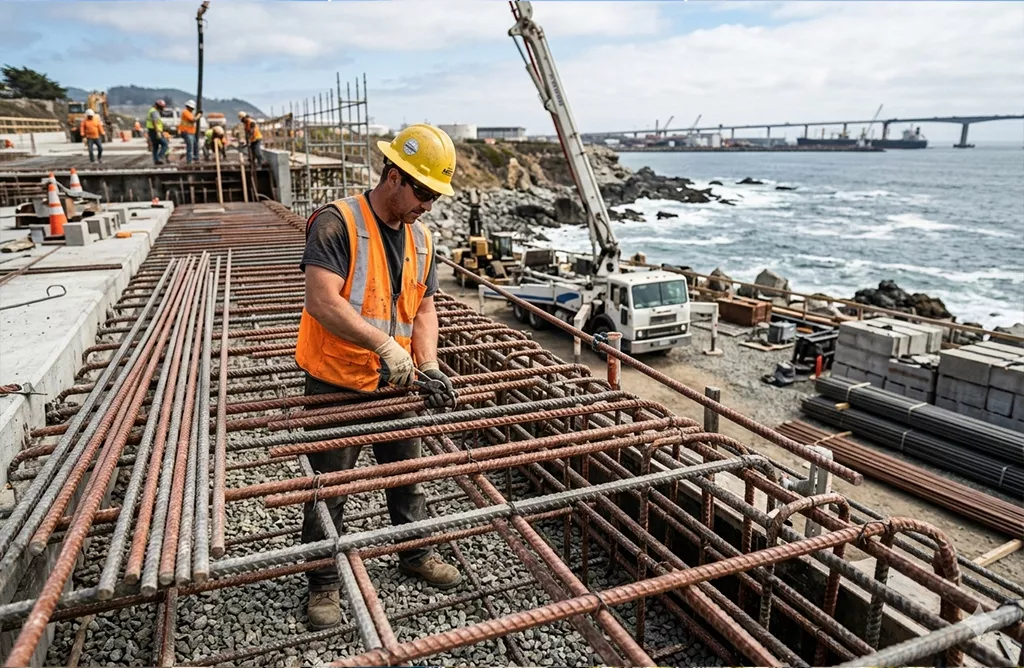
One of the greatest advantages of FRP rebars is their durability. Concrete structures are exposed to various environmental factors such as exposure to water, corrosion by saltwater, chemicals, and exposure to temperature changes. Steel reinforcement in concrete structures tends to lose its strength over time when exposed to such harsh environmental factors.
1. Corrosion Resistance
Corrosion is one of the main reasons why concrete structures fail prematurely. Steel reinforcement expands when it rusts, causing cracks in concrete.
FRP rebars, however, are completely resistant to corrosion. They do not react with water, chemicals, or salt, making them ideal for coastal areas, bridges, and industrial environments.
Because of this property, many roofing company and infrastructure contractors are increasingly choosing frp products for long-lasting construction solutions.
2. High Strength-to-Weight Ratio
Another major advantage of frp rebars is their excellent strength-to-weight ratio. They are much lighter than traditional steel rebars but still provide high tensile strength.
This makes transportation, handling, and installation easier on construction sites. Reduced weight also lowers labor effort and improves project efficiency.
For projects involving roofing services and structural frameworks, lightweight reinforcement materials like frp rebars make construction faster and more cost-effective.
3. Resistance to Chemicals and Harsh Environments
Industrial environments often expose structures to chemicals, moisture, and pollutants that can damage steel reinforcement.
FRP rebars are highly resistant to chemicals and environmental damage. This makes them suitable for wastewater treatment plants, marine structures, chemical factories, and infrastructure projects.
Because of their durability, many frp manufacturers recommend using frp products in environments where traditional materials may fail quickly.
How FRP Rebars Reduce Maintenance Costs
One of the biggest concerns for building owners and contractors is the long-term maintenance of the building. Structures built with steel reinforcement often require repairs because of corrosion and degradation of the material.
FRP rebars can significantly reduce the maintenance requirements for buildings and structures.
1. Longer Lifespan of Structures
As FRP rebars do not corrode easily, they can help in increasing the lifespan of concrete structures.
Structures built with FRP products can last for many decades without requiring reinforcement of the building.
2. Lower Repair and Replacement Costs
Steel reinforcement in buildings often requires repairs because of corrosion damage.
Construction companies can avoid these repair and replacement costs for buildings and structures with FRP rebars. The corrosion-resistant quality of FRP products can provide long-term structural integrity for buildings and structures.
Construction professionals in many roofing companies and contractors are now using FRP products for building solutions because of their long-term benefits and cost efficiency.
3. Reduced Structural Damage
When steel is exposed to moisture and air, it corrodes and expands, causing damage to concrete buildings and structures in the form of cracks.
As FRP rebars do not corrode, they can provide long-term structural integrity for concrete buildings and reduce damage to the building.
Applications of FRP Rebars in Construction
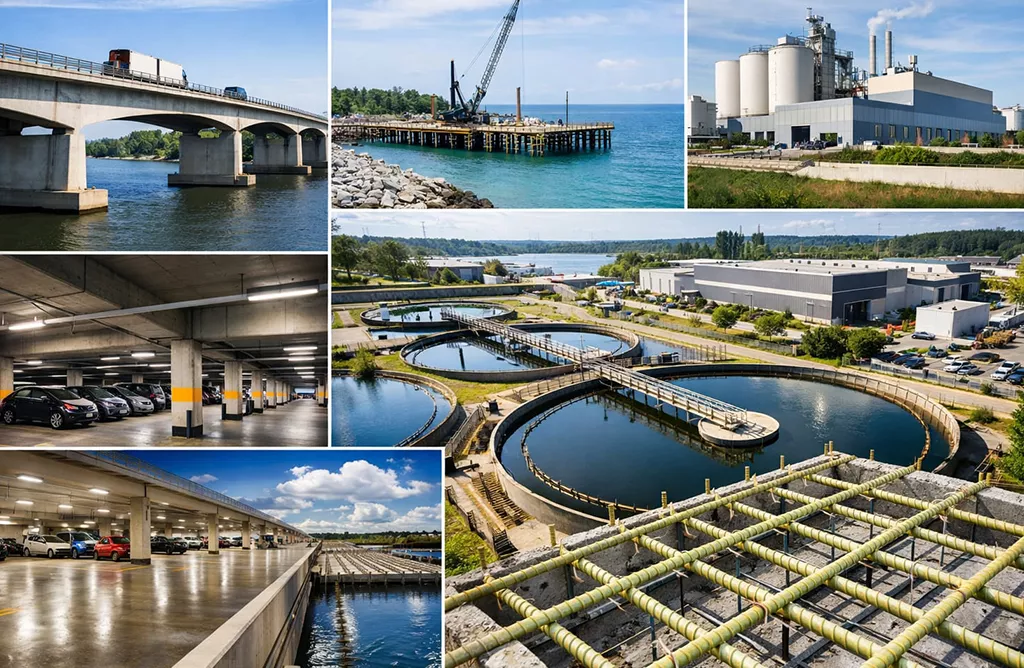
Due to their durability and low maintenance needs, frp rebars can be used in a variety of construction applications.
Some of these applications include:
- Bridges and highways
- Marine and coastal construction
- Industrial buildings
- Parking facilities
- Water treatment plants
- Residential and commercial construction
- Structural reinforcement for roofing services
Most manufacturers of frps are developing innovative frps to support modern construction demands for better buildings and infrastructure.
Why Construction Companies Prefer FRP Products
As the construction industry is changing, there is a need for materials that are durable, eco-friendly, and cost-effective. FRP rebars are suitable for this purpose and provide many benefits in comparison to other materials.
Construction workers, builders, and roofing company workers are using frp products more often because they:
- long-term strength for constructions
- cost-effective maintenance and repair
- corrosion and chemical resistance
- efficient construction
- eco-friendliness
As FRP manufacturers are innovating more and more, FRP materials are becoming a vital part of constructions and infrastructure.
Conclusion
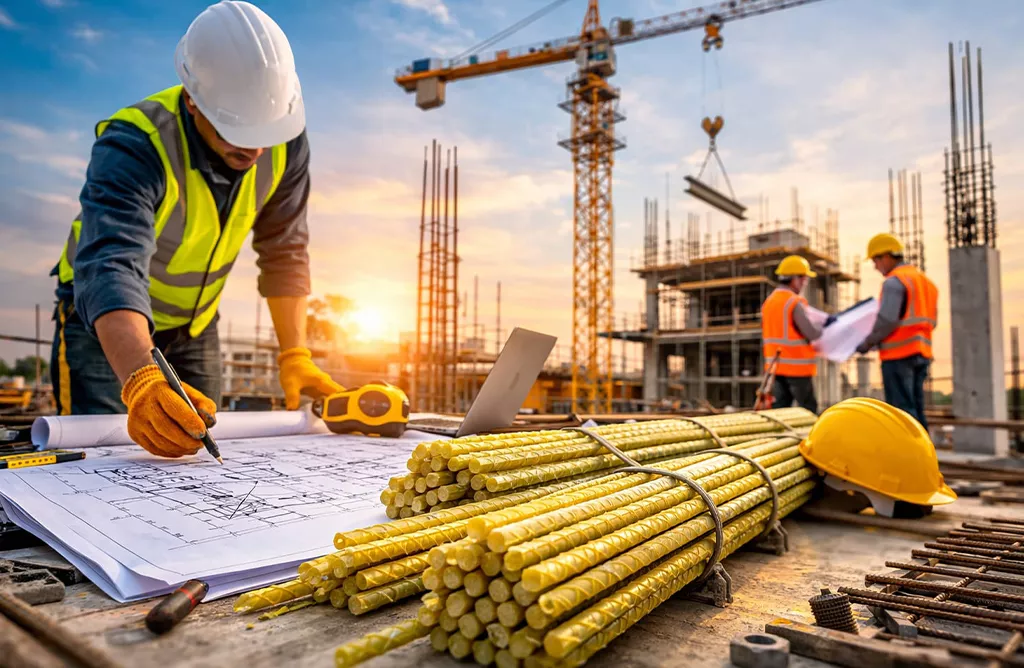
FRP rebars are changing the way the construction industry is functioning by providing a sustainable and cost-effective alternative to steel rebar. FRP rebars can withstand extreme environmental conditions while maintaining their strength. This makes them the best choice for modern constructions.
By adopting the latest frp products, building professionals and experts from different roofing companies can design structures that will be long-lasting and will not demand frequent maintenance. With the increasing support from innovative frp manufacturers, frp rebars will definitely have a larger role to play in the future of the construction industry.
By investing in frp rebars today, one can build structures that will be safe for the future.
FAQs
1. What are FRP rebars used for?
FRP rebars are used to reinforce concrete structures such as bridges, buildings, marine structures, and infrastructure projects where corrosion resistance and durability are required.
2. Are FRP rebars better than steel rebars?
In many applications, frp rebars perform better than steel because they are corrosion-resistant, lightweight, and require less maintenance over time.
3. Do FRP rebars reduce construction costs?
While the initial cost may sometimes be higher, frp rebars reduce long-term maintenance and repair costs, making them more economical in the long run.
4. Who manufactures FRP rebars?
Many specialized frp manufacturers produce frp products including rebars, gratings, sheets, and structural components used in construction.
5. Can FRP rebars be used in roofing structures?
Yes, frp products including frp rebars can be used in structural reinforcement for buildings and projects handled by a roofing company offering professional roofing services.